Quick Answer
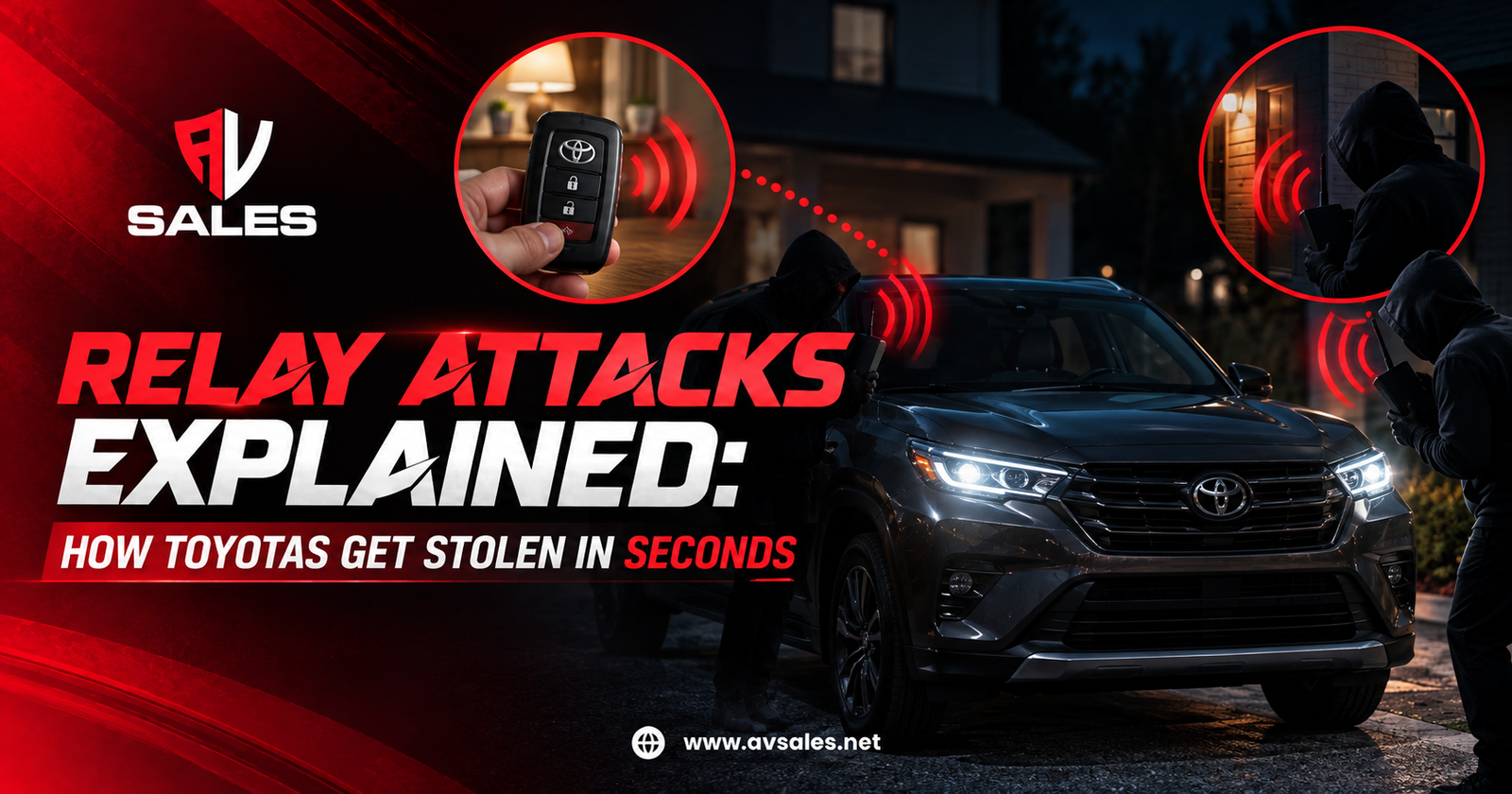
A relay attack is a vehicle theft method that targets the wireless communication between a Toyota and its key fob. By extending that communication, criminals can sometimes make the vehicle believe the authorized key is nearby, allowing the doors to unlock and the engine to start. While Toyota’s factory security systems provide strong protection, relay attacks have become a growing concern for owners of keyless-entry vehicles. The most effective defense is a layered approach that combines secure key storage, updated vehicle software, physical deterrents, and additional anti-theft protection.
What Is a Relay Attack?
A relay attack is a type of electronic vehicle theft that exploits how keyless-entry systems communicate with a vehicle.
Modern Toyotas equipped with Smart Key technology are designed to detect a nearby authorized key fob. When the vehicle detects the correct signal, it allows the driver to unlock the doors and start the engine without physically inserting a key.
A relay attack attempts to extend this communication range. Instead of stealing the key itself, criminals focus on relaying the signal emitted by the legitimate key fob.
Because no physical break-in is required, relay attacks often leave little visible evidence behind.
Why Are Relay Attacks a Concern for Toyota Owners?
Toyota vehicles are known for their reliability and advanced technology, which is one reason they remain popular among drivers worldwide.
However, popularity can also make certain vehicles attractive targets for criminals.
As more Toyota models adopt keyless-entry and push-button start systems, vehicle theft methods have evolved to target convenience features rather than traditional locks and ignitions.
The issue is not unique to Toyota. Relay attacks can potentially affect many manufacturers that use passive keyless-entry systems.
The level of risk depends on:
- Vehicle model
- Model year
- Security architecture
- Software updates
- Anti-theft technologies installed
Newer vehicles often include stronger protections than earlier generations.
How Do Relay Attacks Work?
Step 1: The Vehicle Searches for the Key
When a Toyota equipped with keyless entry is approached, the vehicle searches for an authorized key fob.
If the proper credentials are detected, the vehicle grants access.
Step 2: The Signal Is Extended
In a relay attack, criminals use electronic devices that extend communication between the vehicle and the key.
One device is positioned near the location of the key fob, while another remains close to the vehicle.
The devices relay communication between the two points.
Step 3: The Vehicle Detects What Appears to Be a Nearby Key
Because the vehicle receives a valid response, it may interpret the signal as proof that the authorized key is present.
Depending on the vehicle’s security design, the doors may unlock and the vehicle may allow ignition.
Step 4: The Theft Occurs
If access is successfully obtained, the vehicle can be driven away without obvious signs of forced entry.
This speed and lack of visible damage are among the reasons relay attacks receive significant attention.
Can a Toyota Really Be Stolen Without the Key?
Yes, under certain circumstances.
One of the most surprising aspects of relay attacks is that criminals do not necessarily need physical possession of the key.
Instead, they exploit the communication process between the key fob and the vehicle.
However, this does not mean every Toyota is equally vulnerable.
Several factors influence risk:
- Age of the vehicle
- Type of keyless-entry system
- Security updates
- Manufacturer protections
- Additional anti-theft measures
Many modern Toyota vehicles include security enhancements designed to reduce the effectiveness of relay attacks.
As vehicle security technology improves, manufacturers continue introducing new methods to verify that a key is genuinely nearby.
Want to learn about other techniques criminals use to target modern vehicles? Read our guide on how modern car thieves bypass factory security systems to understand today’s most common vehicle theft methods.
Which Toyota Models Face the Greatest Risk?
There is no single list of Toyota models that are always vulnerable.
The risk generally depends on the generation of security technology installed in the vehicle.
Factors that may increase exposure include:
Older Keyless Systems
Earlier keyless-entry implementations may not include the same protections found in newer vehicles.
High-Demand Models
Popular vehicles can become targets because replacement parts and resale opportunities create financial incentives for criminals.
Outdated Software
Vehicles that have not received the latest available security updates may lack newer protections.
For Toyota owners, staying informed about manufacturer recommendations and available updates is often more valuable than focusing solely on vehicle popularity.
Yes.
Toyota incorporates multiple anti-theft technologies into modern vehicles, including:
- Engine immobilizers
- Encrypted communication systems
- Smart Key authentication
- Factory alarm systems
- Electronic access controls
These systems significantly reduce the success rate of many traditional theft methods.
However, no security system can eliminate risk entirely.
Vehicle security is an ongoing process rather than a one-time solution.
Criminals continuously adapt their methods, which is why experts often recommend combining factory protection with additional security measures.
How to Protect Your Toyota From Relay Attacks
Store Keys Away From Doors and Windows
Many relay attacks depend on proximity to the key fob.
Keeping keys away from entry points may reduce exposure.
Use Signal-Blocking Storage
Signal-blocking pouches and containers are designed to prevent wireless communication when the key is not being used.
When functioning properly, they can reduce the effectiveness of relay-based theft attempts.
Install Available Security Updates
Vehicle manufacturers periodically release software and security improvements.
Installing available updates helps ensure the vehicle benefits from the latest protections.
Use Physical Deterrents
Visible security devices can discourage opportunistic criminals.
Examples include:
- Steering-wheel locks
- Wheel locks
- Secure parking barriers
Park in Secure Locations
Well-lit, monitored, or secured parking areas generally reduce theft opportunities.
Many Toyota owners choose to supplement factory security with:
- Vehicle tracking systems
- Advanced alarm systems
- Secondary immobilizers
- Dedicated anti-theft technology
A layered approach typically provides the strongest overall protection.
Do Faraday Pouches Really Work?
Faraday pouches are designed to block radio-frequency communication from key fobs.
When the key is stored inside a properly functioning Faraday pouch, wireless signals are prevented from reaching the outside environment.
This can help reduce the risk of signal-based theft methods.
However, not all products perform equally.
Owners should periodically test their pouch to confirm that signals are effectively blocked.
Faraday pouches are most effective when used as one part of a broader security strategy rather than as the sole defense against theft.
Common Misconceptions About Relay Attacks
“My Keys Are Inside the House, So They’re Safe”
Keys stored near doors, windows, or exterior walls may still be closer to the vehicle than many owners realize.
“Only Luxury Vehicles Are Targeted”
Vehicle theft affects a wide range of makes and models, including practical daily drivers.
“Factory Security Makes Theft Impossible”
Factory security systems provide strong protection, but no system can guarantee complete immunity from theft.
“Relay Attacks Affect Every Toyota”
Risk varies significantly between models, model years, and security implementations.
Frequently Asked Questions
What is a relay attack on a Toyota?
A relay attack is an electronic theft method that extends communication between a Toyota and its key fob, potentially allowing unauthorized access.
Can a Toyota be stolen without the key?
Yes. Some theft methods target wireless communication rather than requiring physical possession of the key.
Do Faraday pouches stop relay attacks?
When functioning correctly, Faraday pouches can block key-fob signals and reduce the effectiveness of relay attacks.
Are newer Toyotas protected against relay theft?
Many newer models include enhanced security technologies designed to strengthen protection against electronic theft methods.
What is the best way to protect a Toyota from relay attacks?
A layered approach that combines secure key storage, software updates, physical deterrents, and additional anti-theft technology provides the strongest protection.
Looking for extra protection for your Toyota? Explore the Smart Sensor Toyota Anti-Theft System and add another layer of security against modern theft threats.
Bottom Line
Relay attacks highlight how vehicle theft has evolved in the age of keyless-entry technology. While Toyota’s factory security systems offer substantial protection, understanding how these attacks work allows owners to make informed decisions about vehicle security. By combining built-in safeguards with practical prevention measures, Toyota owners can significantly reduce their risk and improve overall vehicle protection.